
Decoding Market Trends: A Plain-English Guide to Understanding Economic Indicators
Decoding the Economic Maze: Why Trends Matter
Have you ever watched the news and felt like economists are speaking a completely different language? You aren’t alone, as decoding market trends often feels like deciphering a secret code that only the pros understand. In reality, economic indicators are simply clues that tell us how the massive machine of our global economy is functioning. By learning to read these signals, you can move from feeling overwhelmed to feeling empowered when making personal financial decisions. Think of these indicators as a dashboard for your car; they tell you when to accelerate, when to brake, and when to get the engine checked. We aren’t here to bore you with complex jargon or dusty textbooks, but rather to break down the essential numbers that move markets daily. Understanding these trends isn’t just for Wall Street traders; it’s a vital skill for anyone managing a budget or planning for their future. When we track indicators like the Consumer Price Index (CPI) or GDP, we get a front-row seat to the health of our local and national communities. Let’s embark on this journey to turn those confusing charts into actionable insights you can actually use. By the time we finish, you will look at a news headline and know exactly what it means for your wallet. It’s time to pull back the curtain and see exactly what makes the financial world tick.

The Big Three: GDP, Inflation, and Employment
To understand the economy, we usually start with the ‘Big Three’ indicators that act as the pillars of financial health. First, Gross Domestic Product (GDP) is the total value of all goods and services produced, and it’s essentially the heartbeat of the nation. If GDP is growing, it usually means businesses are hiring and people are spending, which is a great sign for everyone. Second, we have Inflation, which is often measured by the CPI; this tracks how much the price of your groceries or gas has gone up over time. While a little inflation is normal in a growing economy, too much can quickly erode your purchasing power. Third, the Unemployment Rate tells us how many people are looking for work, which directly impacts consumer confidence and market demand. Here is a quick breakdown of what you should watch:
- GDP: The economy’s growth speed.
- CPI: How much more your coffee costs.
- Jobs Report: The strength of the labor market.
It is fascinating how these three are interconnected in a delicate dance of supply and demand. When one moves, the others often follow in a ripple effect that touches every sector. Learning to balance these three signals is the first step toward becoming an economic-savvy investor. Don’t worry if it sounds like a lot; we will focus on these consistently so you can spot the trends yourself.
Interest Rates and the Role of the Fed
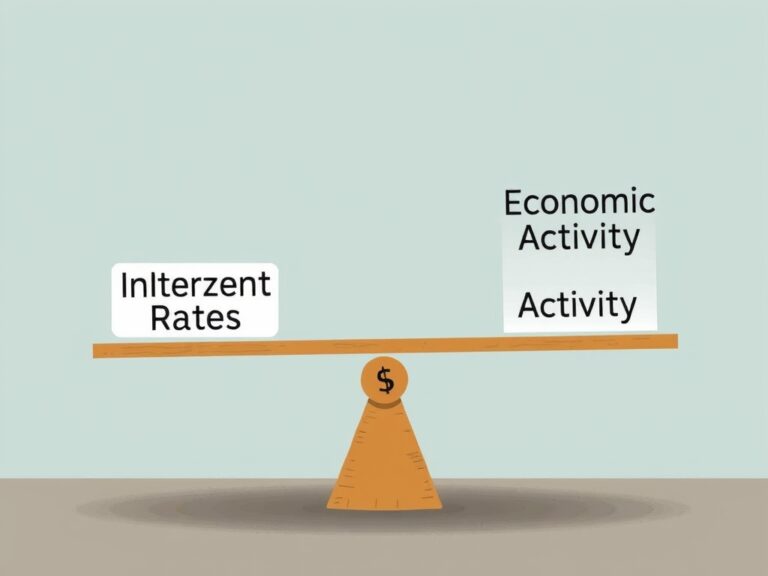
Perhaps no signal is as powerful as interest rates set by the Federal Reserve, often referred to as the ‘Fed.’ When the Fed decides to tweak these rates, it sends waves through the entire financial system, affecting everything from your mortgage rates to the interest you earn on your savings account. Think of interest rates as the ‘price of money’—when they are high, it’s more expensive to borrow, which typically cools down the economy. Conversely, when rates are low, the Fed is essentially trying to encourage spending and business expansion to stimulate growth.
- High Rates: Saving is better, borrowing is harder.
- Low Rates: Borrowing is easier, saving is less rewarding.
This mechanism is how the Fed manages the fine balance between keeping employment high and ensuring inflation stays under control. If you have ever wondered why your credit card APR fluctuates or why buying a house suddenly becomes more expensive, the Fed’s decision is usually the hidden hand behind it. By paying attention to Fed meetings and public statements, you can anticipate shifts in the broader market climate before they fully manifest in your bank statement. It is like having an early warning system for your own financial planning. Knowledge in this area turns you from a passive participant into an active strategist. Stay curious about these announcements, as they are truly the most influential levers in the economic engine.
Putting It All Together: Your Actionable Strategy
Now that you have a better grasp of the indicators, how do you actually apply this to your daily life? The key is to avoid reacting emotionally to every single headline or market dip, which is a common pitfall for many investors. Instead, look for patterns that emerge over several months rather than obsessing over daily fluctuations. Consistency is your greatest asset when the market starts to feel volatile or unpredictable. Here are some simple steps to maintain your financial balance:
- Build an emergency fund to buffer against sudden economic shifts.
- Diversify your investments to spread out risk across different sectors.
- Stay educated, but limit your intake of ‘fear-mongering’ financial news.
Remember that economic indicators are just data points, not crystal balls, and no one can predict the future with 100% certainty. By staying informed, you can make decisions that are aligned with your long-term goals rather than short-term panic. It is perfectly okay to start small and learn more as you go, because every little bit of insight adds up. The goal is to feel comfortable and confident in your financial skin. As you practice observing these trends, you will find that you start to see the world of finance with much more clarity and ease. You’ve got the tools now—go out there and start decoding the economy for yourself!