

5 Foundational Concepts for Building Sustainable Long-Term Wealth
Building Your Financial Foundation: The Path to Sustainable Wealth
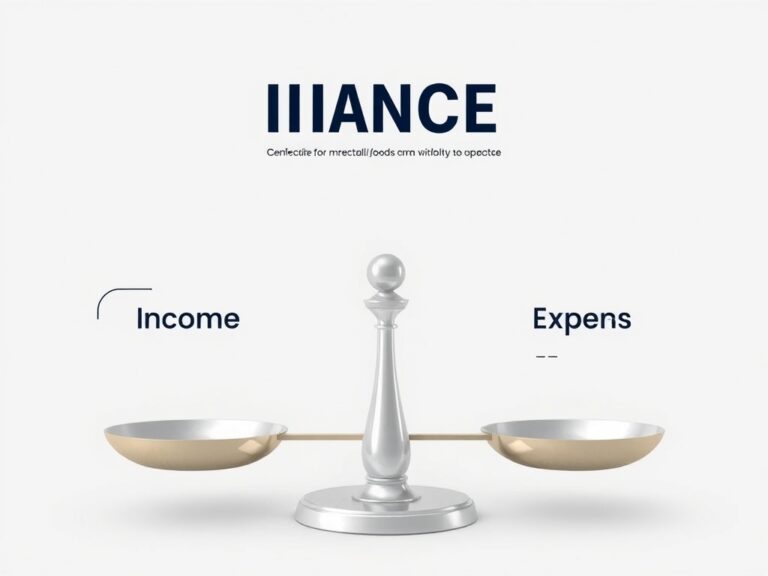
Achieving true financial freedom isn’t about hitting a one-time lottery; it’s a marathon, not a sprint. 🚀 To build sustainable long-term wealth, you must first master the art of budgeting and conscious spending. By understanding exactly where your money goes, you reclaim control over your future rather than letting your expenses dictate your lifestyle. Start by tracking your income versus your outgoings for at least 30 days. This simple audit is the bedrock of all successful wealth management strategies. When you spend less than you earn, you create a surplus that acts as the fuel for your future investments. Remember, it is not what you make, but what you keep that counts toward your net worth. Consistency is the secret ingredient that turns small habits into massive results over time. If you can master this foundational step, you are already ahead of the majority of people struggling with debt cycles. Take the time to audit your subscriptions, your dining habits, and your impulse purchases today.
The Power of Compound Interest: Your Money Working for You
The second pillar of wealth is understanding the incredible power of compound interest, often called the eighth wonder of the world. 📈 When you invest, your earnings generate their own earnings, creating a snowball effect that accelerates your net worth growth exponentially. The key here is time; the earlier you start, the less heavy lifting your bank account has to do in the long run. Even small, regular contributions to an investment portfolio can transform into substantial retirement funds thanks to this mathematical magic. Do not wait for the ‘perfect’ time or a massive windfall to begin your journey. Instead, consider these actionable steps:
- Open a tax-advantaged account like an IRA or 401(k).
- Automate your monthly contributions to remove emotional decision-making.
- Focus on low-cost index funds to minimize fees.
- Reinvest your dividends to maximize growth.
By letting time work in your favor, you effectively turn your money into a tireless employee that never sleeps or asks for a raise. It is the single most effective way to ensure your future security while you focus on your career or personal life.
Diversification: Protecting Your Assets Against Volatility
Never put all your eggs in one basket—it is a classic piece of advice for a reason. To build a resilient portfolio, you need to practice asset diversification. 🛡️ By spreading your investments across various asset classes like stocks, bonds, real estate, and commodities, you significantly reduce your overall risk. Market volatility is inevitable, but a diversified approach ensures that a downturn in one sector won’t wipe out your entire life savings. Think of it as building a safety net that protects you from the unpredictable nature of global markets. You should regularly review your asset allocation to ensure it still aligns with your long-term goals and risk tolerance. As you grow closer to your desired retirement age, it is generally wise to shift toward more conservative options. However, for those with a longer time horizon, growth-oriented assets are essential for outpacing inflation. Always stay informed, but try to avoid the common mistake of ‘panic selling’ when the market hits a temporary rough patch. A disciplined, diversified strategy is your best defense against market turbulence.
Investing in Yourself: The Highest ROI Asset
While stocks and real estate are important, your greatest financial asset is actually you. 💡 Investing in your own human capital is the most reliable way to increase your earning potential over a lifetime. This includes learning new high-value skills, obtaining certifications, or even improving your soft skills like negotiation and leadership. When you increase your value to the marketplace, your income ceiling rises, allowing you to invest even more into your wealth-building systems. Consider reading industry-leading books, attending workshops, or pursuing mentorship to stay ahead of the curve. Never become stagnant in your professional development; the world moves fast, and your skill set needs to keep pace.
- Seek out mentors who have already achieved your goals.
- Prioritize health as part of your investment—a healthy body fuels a productive mind.
- Use digital platforms to learn new, in-demand technical skills.
- Network with peers who push you to be better.
By continuously upgrading yourself, you ensure that you remain competitive and capable of adapting to any economic shift that comes your way.
The Mindset Shift: From Consumer to Owner
Finally, the most overlooked aspect of sustainable wealth is shifting your mindset from being a consumer to being an owner. 🏢 Consumers spend money on depreciating assets that lose value the moment they leave the store. Owners, on the other hand, invest in assets—like business equity, real estate, or income-generating intellectual property—that put money back into their pockets. This change in perspective is vital because it stops you from chasing fleeting trends and starts you on the path of value creation. True wealth is built by owning things that perform, build value, and scale over time. Start by looking for opportunities to be a stakeholder in the economy rather than just a participant. Ask yourself: ‘Will this purchase help me grow, or will it just drain my resources?’ By prioritizing long-term ownership over instant gratification, you align your daily actions with your biggest life goals. It is a fundamental transformation that changes how you interact with money at every level. Once you view your financial life through the lens of ownership, your decisions become clearer and much more profitable.