
Market Trends Decoded: A Simple Guide to Economic Indicators and Price Movements
Decoding the Pulse of the Market: Why Economic Indicators Matter
Have you ever wondered why the stock market seems to dance to its own tune, only to pivot wildly when a single report is released? Economic indicators are the compass for investors, acting as the heartbeat of the global financial system that tells us whether the economy is thriving or heading toward a cooling period. Understanding these metrics isn’t just for Wall Street professionals; it is a vital skill for anyone looking to make smarter decisions with their money. When we talk about market trends, we are essentially looking at the collective behavior of participants reacting to data points like inflation rates, employment numbers, and consumer confidence. Think of the economy like a massive, complex machine where every gear represents a different sector, and these indicators are the sensors that tell us if the engine is running smoothly or starting to overheat. By learning how to interpret these signals, you move from guessing blindly to making calculated, informed moves in your portfolio. It is about cutting through the noise of daily headlines and focusing on the structural shifts that actually dictate price movements. In this guide, we will break down the complex jargon into simple, actionable insights that help you stay ahead of the curve. Let’s start this journey toward financial literacy by demystifying the data that powers the modern economy.

The Big Three: Inflation, Interest Rates, and Employment
To truly decode price movements, you need to keep a close eye on the ‘Big Three’ economic indicators that move markets the most. First, inflation is the silent force that erodes purchasing power, and central banks monitor it obsessively through the Consumer Price Index (CPI). Second, interest rates act as the cost of borrowing; when rates rise, it often signals a tightening economy which can put downward pressure on stock prices. Third, employment data—specifically the non-farm payroll report—tells us if businesses are hiring, which is a massive indicator of long-term economic health. You should keep an eye on these specific factors:
- The CPI report for inflationary pressure trends.
- Federal Reserve meeting minutes for interest rate projections.
- Monthly job growth statistics for private sector vitality.
These data points aren’t just dry numbers; they represent millions of individual decisions made by consumers and corporations every single day. When inflation is high, companies often face higher costs, which eventually leads to tighter profit margins and potentially lower stock valuations for investors. Conversely, low interest rates often stimulate growth, encouraging companies to borrow and expand their operations, which can spark a bull market. Balancing these three variables is the key to predicting where the market might head next in the coming quarters.
How Market Sentiment Drives Short-Term Price Action
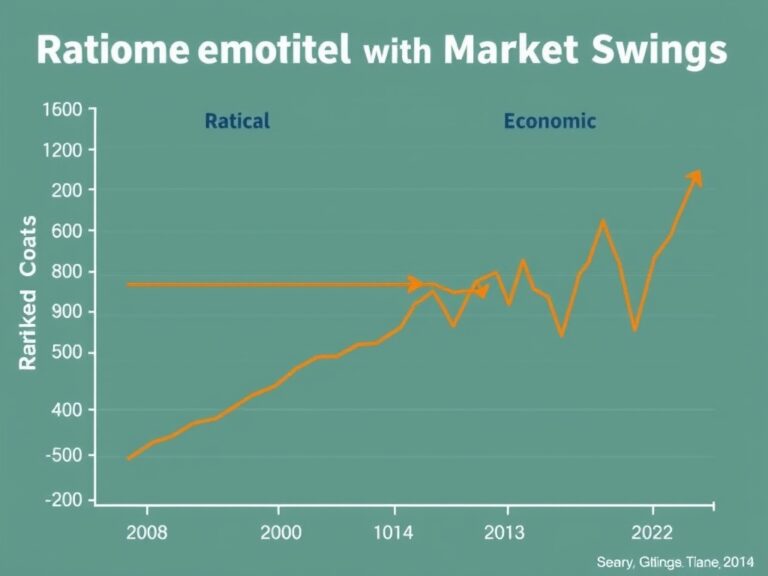
While economic data provides the foundation, market sentiment often acts as the catalyst for rapid price fluctuations in the short term. Even if the underlying fundamentals are strong, a wave of panic or irrational exuberance can cause prices to deviate significantly from their fair value. This phenomenon occurs because the market is made up of human beings who are often influenced by fear, greed, and herd mentality. Technical analysis plays a huge role here, as many traders use support and resistance levels to gauge where the ‘crowd’ is likely to jump in or bail out. You might notice that when a piece of news hits, the initial reaction is often emotional, leading to sharp spikes or drops that don’t always align with the long-term economic picture. Recognizing this difference between fundamental value and emotional reaction is exactly how experienced investors spot buying opportunities during market dips. To stay composed during these periods, it is helpful to look at:
- Volume indicators to see if a price move has true conviction behind it.
- Moving averages to filter out the noise and identify the actual trend.
- Sentiment indices like the VIX, often called the ‘fear gauge’ of the market.
By keeping your cool while others are reacting purely on emotion, you gain a distinct advantage in navigating the volatility of modern financial markets.
Mastering Your Strategy: Long-Term Growth vs. Short-Term Trading
At the end of the day, your success depends on matching your personal strategy with the economic realities we have decoded. Are you a long-term investor looking to build generational wealth, or are you a trader looking to capitalize on cyclical price movements? For the long-term player, short-term volatility caused by a single economic report is often just background noise that you can safely ignore. Conversely, for the active trader, these economic indicators are the bread and butter of your daily profit strategy, providing the necessary volatility to capture alpha. Consistency is the key regardless of which path you choose, and having a clear plan prevents you from making reactive, costly mistakes. Remember that economic trends are rarely linear; they operate in cycles of expansion, peak, contraction, and trough, and knowing where you are in the cycle helps you adjust your asset allocation accordingly. If the economy is peaking, you might shift towards more defensive assets, while a trough might be the perfect time to pick up growth stocks at a discount. By combining deep fundamental analysis with a healthy dose of patience, you can navigate even the most uncertain market conditions with confidence. Keep learning, keep monitoring the indicators, and keep your focus on your long-term financial goals for the best results.