Market Movements Explained: A Plain-English Guide to Economic Indicators
Understanding Market Movements: Why Economics Matters
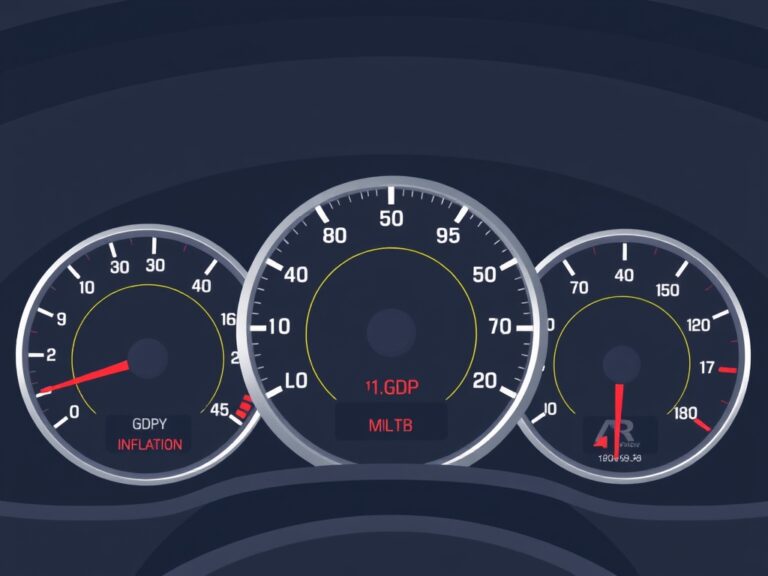
Have you ever wondered why the stock market takes a sudden nosedive or why your morning coffee suddenly feels a bit more expensive? Market movements are essentially the pulse of our global economy, reflecting how millions of participants react to changing conditions. At their core, these movements are driven by economic indicators—statistical reports that provide a snapshot of the health of a nation’s financial state. Think of these indicators like the dashboard of your car; they tell you if you’re cruising smoothly or if the engine is about to overheat. By learning to read these signals, you shift from being a passive observer to an informed participant. Whether you’re an investor, a business owner, or just curious, understanding these metrics demystifies the chaotic noise of financial news. We are going to break down these complex ideas into plain English so you can navigate the financial landscape with confidence. Don’t worry if it sounds intimidating; we will keep things simple, engaging, and actionable for your daily life.
1. Gross Domestic Product (GDP): The Big Picture
The most famous indicator in the financial world is undoubtedly the Gross Domestic Product, or GDP. Simply put, GDP measures the total monetary value of all finished goods and services produced within a country’s borders during a specific period. It is the gold standard for gauging economic growth, telling us if the economy is expanding or contracting. When GDP is up, businesses are generally thriving, and consumer spending is robust. If GDP starts to shrink, it often signals a cooling period or even a potential recession. Investors keep a close eye on quarterly GDP reports because they act as a barometer for market optimism.
- High GDP: Often leads to bullish market sentiment.
- Low/Negative GDP: Frequently triggers caution and potential sell-offs.
It isn’t just a number; it’s a reflection of our collective productivity and standard of living. Understanding GDP helps you predict whether the broader economic environment is supportive of your long-term financial goals.
2. Inflation and the Consumer Price Index (CPI)
Next on our list is the concept of inflation, which is often tracked using the Consumer Price Index (CPI). In layman’s terms, inflation represents the rate at which the general level of prices for goods and services is rising. If inflation is high, the purchasing power of your money decreases, meaning your dollar doesn’t stretch as far as it used to. The CPI tracks a ‘basket’ of common items—like groceries, gasoline, and housing—to give us a clear view of these price changes. Central banks, like the Federal Reserve, monitor inflation closely because their primary job is to keep it stable. When inflation runs too hot, banks often raise interest rates to cool the economy down. For you, this means understanding why interest rates on your credit cards or mortgages might fluctuate.
- Rising CPI often leads to higher interest rates.
- Stable CPI indicates a predictable cost of living.
Keeping an eye on inflation is essential for protecting your personal wealth against the ‘hidden tax’ of rising costs.
3. Employment Data: The Heartbeat of the Economy
Finally, we cannot talk about market movements without mentioning labor market data, specifically the Non-Farm Payrolls report. This data tells us how many new jobs were added or lost in a month, excluding the farming industry, which tends to be seasonal. When people have jobs, they have income, and when they have income, they spend money, driving the economy forward. A strong labor market is a sign of economic resilience and usually encourages businesses to expand operations. Conversely, high unemployment rates can lead to a drop in consumer confidence and stalled market growth. Investors look at this data to see if the engine of consumer spending is firing on all cylinders.
- Low unemployment often fuels consumer spending.
- Job growth reports are usually a catalyst for significant market volatility.
Because consumer spending accounts for a huge chunk of GDP, the health of the workforce is perhaps the most personal economic indicator of all. It reminds us that behind every statistic, there is a person striving for financial stability.