
Market Analysis Simplified: Understanding Economic Indicators and Trends in Plain English
Mastering Market Analysis: Decoding the Economic Pulse
Have you ever wondered why the stock market swings wildly based on a single news report, or why your grocery bill seems to fluctuate? Market analysis might sound like a complex beast reserved for Wall Street elites, but it is actually just a way of reading the story behind our economy. Think of economic indicators as the vital signs of a nation, telling us whether the financial heart is beating strong or struggling to keep pace. By learning to interpret these signals—like unemployment rates or consumer confidence—you can make far more informed decisions about your own personal investments and savings. In this guide, we are going to strip away the jargon and break down exactly what you need to know to navigate the financial landscape with confidence. You don’t need a degree in economics to spot trends; you just need to know which data points actually matter to your bottom line. We’ll explore how these indicators ripple through industries, affecting everything from interest rates to the cost of your morning coffee. Let’s start this journey toward financial literacy by simplifying the complex world of market trends into actionable, plain-English insights. Get ready to look at financial news headlines through a completely different, more empowered lens starting right now!
The Key Indicators Every Investor Should Watch
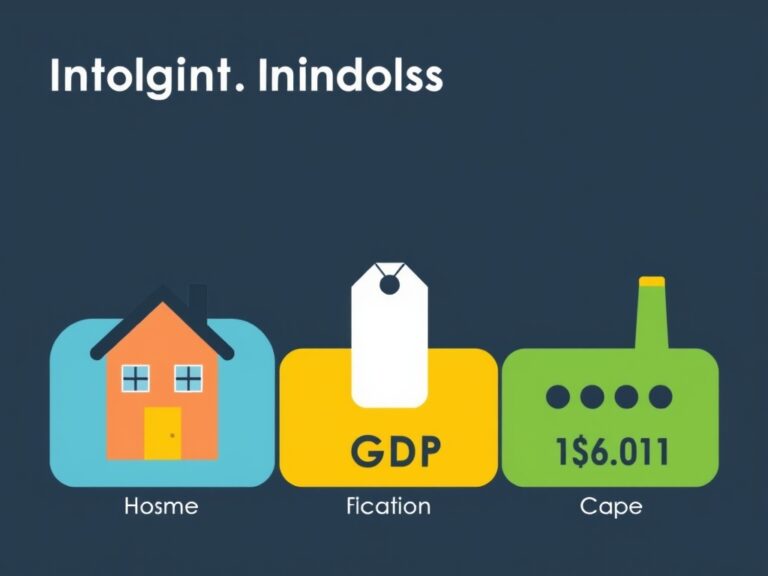
To truly understand market analysis, you must first recognize the ‘Big Three’ economic indicators that steer the ship of global finance. First, there is the Gross Domestic Product (GDP), which acts as the total scorecard for a country’s economic activity over a specific period. Second, we look closely at Inflation, measured by the Consumer Price Index (CPI), which tells us how fast prices are rising and how much your purchasing power is shrinking. Third, the Unemployment Rate acts as a mirror for consumer spending capacity; after all, a paycheck is the primary driver of growth in any healthy economy. Beyond these, savvy investors keep an eye on:
- Interest Rates set by central banks.
- Housing Starts, signaling future construction and consumer optimism.
- Retail Sales, which directly reflect current consumer behavior and confidence.
By keeping a watchlist of these metrics, you can anticipate shifts before they make the front page of major news sites. Remember, an economy is just a collection of human choices, and these indicators simply track those patterns on a massive scale. When you track these, you are essentially looking at the collective behavior of millions of participants. It is empowering to know that you can predict market shifts simply by paying attention to the right data points regularly. Developing this habit will distinguish you from the casual investor who reacts to news rather than planning for it.
Identifying Trends and Avoiding Market Noise
Distinguishing between market noise and genuine economic trends is perhaps the most difficult skill for any investor to cultivate. Noise is the daily fluctuation of stock prices that happens because of rumors, social media hype, or short-term panic that rarely reflects underlying value. Conversely, a trend represents a sustained movement in the market driven by fundamental changes, such as technological shifts or long-term demographic transformations. To spot a real trend, you should look for consistency over quarters rather than reacting to headlines that change every twenty-four hours. Ask yourself these three questions when assessing a new market movement:
- Is this driven by a fundamental change in how people live or work?
- Are multiple economic indicators pointing in the same direction?
- Is this change sustainable over the next three to five years?
When you focus on these long-term signals, you effectively filter out the chaos of day-to-day volatility. This mindset shift is what separates the gamblers from the investors, allowing you to build a portfolio that stands the test of time. Keep in mind that patience is your greatest ally in market analysis because trends often take months to fully materialize. Don’t fall into the trap of ‘analysis paralysis’ where you look at too much data; focus instead on a few key metrics that tell the most accurate story. By filtering out the noise, you clear the path for better, more logical decision-making in all your financial ventures.

Putting Your Knowledge into Action
Now that you have a better grasp of the indicators and the ability to spot genuine trends, it is time to turn your knowledge into a practical plan. Start by setting aside just fifteen minutes once a week to review the primary reports we discussed, such as the latest CPI data or the jobs report. Use reliable, free resources like government labor statistics websites or established financial news outlets that provide raw data rather than opinionated commentary. As you begin to connect the dots, you will likely notice that your confidence in managing your assets grows significantly because you are no longer operating in the dark. Remember these golden rules for success:
- Always diversify your portfolio to hedge against unexpected market shifts.
- Keep an emergency fund so you aren’t forced to sell during a temporary market downturn.
- Stay curious and continue to learn about how global events influence your local economy.
Understanding the market is not a one-time event; it is an ongoing, evolving process that rewards the observant and the patient. You have the tools now to move beyond the surface-level panic and look at the actual mechanics of the financial world. Whether you are investing for retirement or just trying to protect your savings from inflation, these simple principles will serve you well. Take control of your financial destiny today by applying these insights to your daily life. Your future self will certainly thank you for taking the time to master these essential economic concepts now!