
Making Sense of the Markets: A Plain-English Guide to Economic Indicators and Trends
Decoding the Economic Maze: Why Indicators Matter
Have you ever watched the news and felt like they were speaking a completely different language when discussing market trends or economic indicators? You aren’t alone, as the financial world often hides behind complex jargon that makes simple market shifts feel like a puzzle. Understanding how the economy functions doesn’t require a PhD in finance; it simply requires knowing which indicators act as your roadmap. When we talk about economic health, we are essentially looking at the pulse of our daily lives, from interest rates to employment numbers. By grasping these key metrics, you transform from a confused spectator into an informed participant in your own financial future. This guide aims to demystify these complex topics, ensuring you can interpret data with confidence and clarity. Knowledge is power, and in the world of investing, it is the most valuable asset you can possess. Let’s break down the noise and focus on what truly drives the market engine. Whether you are a beginner or looking to sharpen your skills, this overview will provide the foundational context you need. Get ready to navigate the financial landscape like a pro, moving beyond the headlines to understand the underlying currents of the economy.
The Big Three: GDP, Inflation, and Employment
To really get a handle on the markets, you need to track the ‘Big Three’ metrics that economists monitor obsessively: GDP, Inflation, and Employment rates. Think of Gross Domestic Product as the total scorecard for everything produced in the country, acting as the primary gauge of overall economic health. Meanwhile, inflation is the silent thief that impacts your purchasing power, usually measured by the Consumer Price Index (CPI). If inflation rises too quickly, your money doesn’t go as far, which is why central banks constantly adjust interest rates to keep things in balance. Then there is the employment data, specifically the monthly Non-Farm Payrolls report, which tells us how many people are landing jobs and contributing to the cycle of spending. When people are working, they spend, which fuels business growth and sustains the market cycle. Keeping an eye on these three pillars allows you to anticipate major shifts before they happen. Consider these your primary diagnostic tools for assessing whether the economy is overheating or struggling to gain traction. Don’t worry if it sounds like a lot; we will simplify how these numbers interact in the next section.
How Interest Rates Influence Every Financial Decision
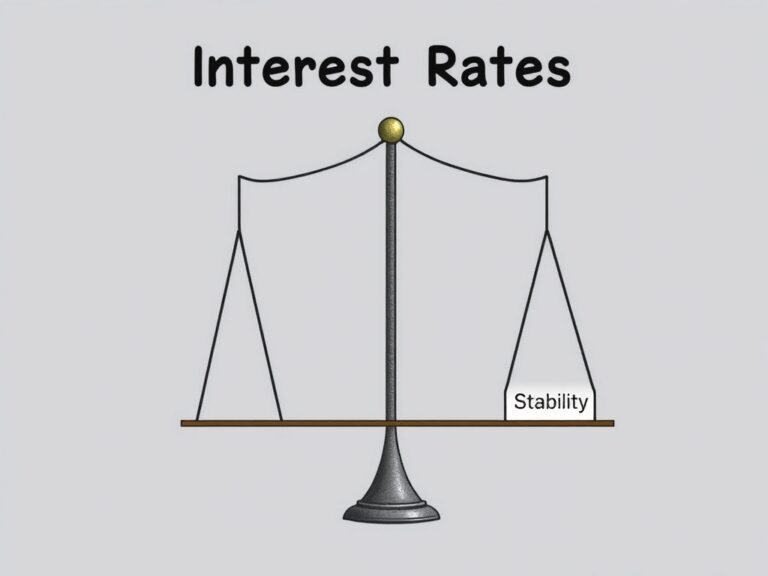
If there is one lever that moves the entire financial world, it is undoubtedly the Federal Reserve’s interest rate policy. When the Fed raises rates, borrowing costs money, which acts like a brake on the economy to slow down excessive inflation. Conversely, when rates are cut, borrowing becomes cheaper, encouraging businesses to expand and individuals to purchase homes or start new ventures. Here is a quick breakdown of how these changes ripple through the markets:
- High Rates: Often lead to higher savings account yields but can slow down stock market growth.
- Low Rates: Usually boost the stock market but can decrease your returns on cash savings.
- Policy Shifts: Investors often react more to the expectation of rate changes than the actual announcement itself.
Understanding this relationship helps you predict market volatility during central bank meetings. It is essential to recognize that interest rates are the ultimate pendulum, swinging between growth and stability. By paying attention to these central bank signals, you can adjust your own financial strategy to align with the broader economic climate. Always remember that the cost of capital is the heartbeat of modern commerce.
Looking Ahead: Identifying Trends Before They Hit
So, how do you spot emerging market trends before they become front-page news? Start by looking at Leading Economic Indicators, such as the stock market performance, housing starts, and manufacturing orders. While lagging indicators tell you what has already happened, leading indicators provide a glimpse into where the economy is headed in the next six to twelve months. Smart investors focus on the delta—the change—rather than just the absolute number. For instance, if business confidence surveys are consistently trending downward, a slowdown in hiring might be just around the corner. You should also watch for consumer sentiment indices, as the psychology of spending is often a self-fulfilling prophecy. When people feel confident, they spend; when they fear the future, they save. Maintaining a long-term perspective is vital, as short-term market noise often masks these larger, more meaningful economic shifts. By synthesizing these signals, you can build a more resilient portfolio and make proactive rather than reactive financial decisions. You now have the toolkit to interpret the data, so keep practicing, stay curious, and continue monitoring these essential indicators to stay ahead of the game.