
Foundational Principles for Building Long-Term Wealth: A Strategic Guide
Mastering Your Financial Foundation: A Strategic Approach
Building long-term wealth isn’t about getting lucky with a single investment; it’s about mastering the foundational principles of personal finance. Many people look for shortcuts, but the reality is that consistency and strategic planning are the true drivers of sustainable growth. Think of your financial life like a skyscraper—without a deep, solid foundation, it simply cannot reach the heights you envision. To begin, you must take a clear, honest look at your current financial state, tracking every dollar that comes in and goes out. By identifying your net worth and understanding your cash flow, you create the bedrock upon which all future wealth is built. It is not enough to just save; you must save with intent, ensuring your money is allocated toward assets that actually appreciate over time. Remember, the journey toward financial freedom is a marathon, not a sprint, and your mindset at the start is just as important as the numbers in your bank account. Start by setting SMART goals—Specific, Measurable, Achievable, Relevant, and Time-bound—to keep yourself focused on the bigger picture. Once you have a clear vision, the path becomes much less daunting, and you can start making decisions that align with your long-term future rather than short-term impulses.

The Power of Compound Interest and Strategic Investing
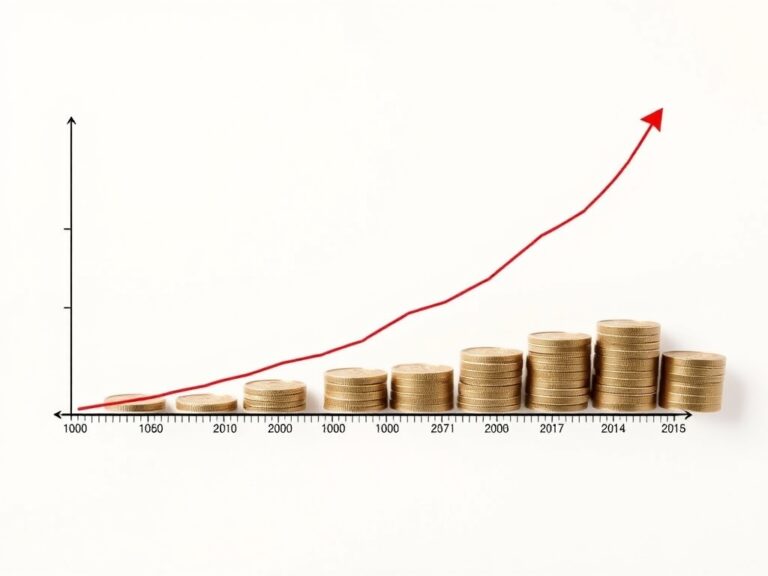
Once your foundation is set, the secret weapon for building true long-term wealth is the magical force of compound interest. Albert Einstein famously called it the eighth wonder of the world, and when you look at how it exponentially grows your assets, you will understand why. You don’t need a fortune to start, but you do need time, which is why starting as early as possible is the single best strategy you can implement. Instead of chasing high-risk ‘get-rich-quick’ schemes, focus on a diversified portfolio that includes low-cost index funds and ETFs. Here are a few key strategies to consider:
- Maximize contributions to tax-advantaged accounts like a 401(k) or IRA.
- Automate your investments to remove the emotion from trading.
- Rebalance your portfolio periodically to maintain your target asset allocation.
- Avoid frequent buying and selling, which often leads to unnecessary fees and tax burdens.
By keeping costs low and staying invested through market volatility, you allow your money to work as hard for you as you once did for it. Compounding requires patience, but it is the ultimate tool for achieving financial independence without needing to be an expert stock picker. Consistent, incremental progress is significantly more effective than intermittent bursts of activity. Over time, your dividends and interest will begin to generate their own returns, creating a snowball effect that transforms modest monthly contributions into substantial long-term holdings.
Debt Management: Turning Liabilities into Opportunities
Managing debt is arguably the most critical aspect of your financial health, yet many people overlook its impact on their wealth-building capacity. Not all debt is created equal, and understanding the difference between good debt and bad debt is essential. Good debt, such as a low-interest mortgage or a student loan for a high-value degree, can actually help you leverage your net worth over time. Conversely, high-interest consumer debt, like credit card balances, is a financial anchor that drags down your ability to save and invest effectively. To take control, try implementing the debt avalanche or debt snowball methods to pay down your balances systematically and efficiently.
- List all debts from highest to lowest interest rate.
- Commit to paying more than the minimum payment every single month.
- Build a small emergency fund before aggressively attacking debt to prevent future reliance on credit.
- Refinance or consolidate high-interest loans if the math makes sense for your bottom line.
When you eliminate high-interest liabilities, you effectively receive a guaranteed ‘return’ on your money equal to the interest rate you are no longer paying. This is a massive psychological and financial win that clears the path for more aggressive wealth accumulation. By staying out of high-cost debt, you maintain the flexibility needed to seize investment opportunities when they arise, rather than being stuck paying interest to someone else. Ultimately, your goal is to transition from being a borrower to becoming a capital allocator, allowing your assets to fund your lifestyle instead of your creditors.
Developing the Wealth-Building Mindset
Building wealth is just as much a mental game as it is a mathematical one, requiring a shift in how you view money. Successful investors understand that financial discipline is about delaying gratification today to ensure a much higher quality of life tomorrow. It involves ignoring the pressure of social comparison—often fueled by social media—that encourages us to spend money we don’t have to impress people we don’t even know. Instead, focus on frugal innovation: spending money on things that truly bring you value and cutting back ruthlessly on things that do not. Cultivating an abundance mindset allows you to see the world as a place of opportunity, rather than a place of scarcity where you feel the need to compete with others.
- Read books on personal finance to continually educate yourself on tax laws and market trends.
- Find a mentor or a community that supports your goals of financial freedom.
- Practice gratitude for what you have while you build toward what you want.
- Regularly review your progress to celebrate small wins along the journey.
When you change your relationship with money, you stop being a slave to your paycheck and start becoming a master of your financial destiny. This mental fortitude is what separates those who build lasting wealth from those who struggle to make ends meet for their entire lives. Consistency is boring, but it is exactly this ‘boring’ approach that yields the most dramatic results in the long run. By keeping your eye on the finish line and staying committed to these foundational principles, you are setting yourself up to reach a level of security that will benefit you and your family for decades to come.