
Foundational Concepts for Building Long-Term Wealth: A Strategic Guide
Building the Bedrock: The Psychology of Wealth Creation
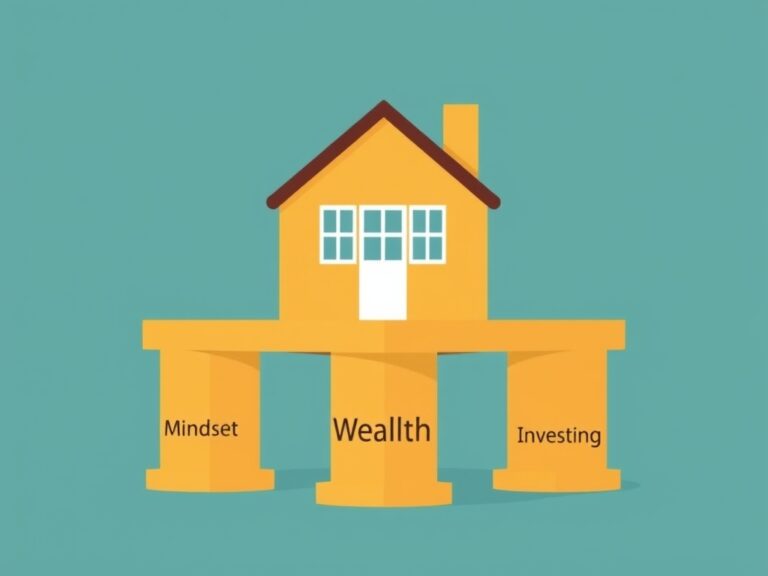
Welcome to your journey toward financial freedom, where we turn long-term wealth building into an achievable reality rather than a distant dream. Many people assume that becoming wealthy is purely about luck or high salaries, but in truth, it is about foundational habits and strategic patience. To build lasting success, you must first shift your mindset from short-term spending to intentional saving. Consider this your masterclass in financial literacy, where we break down complex concepts into actionable steps. Think of your wealth as a house: you cannot start with the roof; you must pour a concrete foundation that holds up against market storms.
- Prioritize paying yourself first
- Automate your savings to remove emotional barriers
- Understand the difference between assets and liabilities
By focusing on these core pillars, you transform your relationship with money from one of fear to one of empowerment. Are you ready to stop chasing quick wins and start building a legacy? Let us dive deep into the strategies that separate the financially stable from the truly wealthy. This is not just about numbers on a screen; it is about reclaiming your time and choices for years to come.
Mastering the Power of Compound Interest
If there is one ‘secret’ to long-term wealth, it is unequivocally the magic of compound interest. Albert Einstein famously called it the eighth wonder of the world, and for good reason: it allows your money to work harder than you ever could. When you reinvest your earnings, your interest begins to earn interest, creating an exponential growth curve over time.
- Time is your greatest asset in the market
- Consistency beats sporadic large investments every single time
- The ‘Rule of 72’ is a simple way to estimate your doubling time
Start early, because the impact of compounding is most dramatic in the later years of your investment journey. Even if you start with small contributions, the habit of consistency is what builds the snowball effect. Do not let the complexity of stock markets intimidate you; index funds and diversified portfolios are designed to harness this power effortlessly. Remember, patience is not just a virtue here; it is your most effective financial tool. By leaving your investments alone, you allow the market to do the heavy lifting for you while you focus on your career or passions. It is a slow race, but the finish line is remarkably rewarding for those who stay the course.
The Art of Asset Allocation and Diversification
When it comes to wealth management, putting all your eggs in one basket is a recipe for disaster. Effective asset allocation is the process of spreading your investments across different categories—like stocks, bonds, and real estate—to minimize risk. By diversifying, you ensure that a downturn in one sector does not derail your entire financial future.
- Balance your portfolio based on your risk tolerance
- Rebalance annually to maintain your target allocation
- Keep a liquid emergency fund for unforeseen life events
Think of diversification as your insurance policy against market volatility; it smooths out the ride so you can sleep soundly at night. Expert investors know that risk management is just as important as potential growth. You do not need to be a Wall Street professional to build a robust portfolio; simple, low-cost ETFs often provide exactly the diversification you need. By keeping your costs low and your exposure broad, you are statistically more likely to outperform many active pickers over the long run. Take a proactive approach by reviewing your holdings periodically to ensure they still align with your life goals. This strategic discipline keeps your wealth trajectory pointing steadily upward regardless of economic headlines.

Sustainable Habits: The Final Piece of the Puzzle
Finally, building long-term wealth requires the maintenance of sustainable lifestyle habits that support your financial goals. It is easy to fall into the trap of ‘lifestyle creep’ as your income increases, but true wealth is built on the gap between what you earn and what you spend.
- Track your expenses to identify ‘leaks’ in your budget
- Set clear, measurable financial goals for the next five and ten years
- Invest in your own skills to increase your earning power
By choosing to live below your means, you create the surplus capital necessary to fund your future. Remember that your most valuable asset is your own ability to earn, learn, and adapt in an ever-changing economy. Keep your debt low, especially high-interest consumer debt, which acts as a heavy anchor on your progress. Surround yourself with information, read widely, and never stop learning about how capital moves through the world. You are the CEO of your own life, and every decision you make is a transaction that impacts your future self. Commit to this path of intentionality, stay disciplined during the lean times, and watch as your foundational efforts blossom into enduring success. Your future self will thank you for the sacrifices and strategies you are implementing today.