
Understanding Market Trends: A Plain-English Guide to Economic Indicators
Decoding the Pulse of the Economy
Have you ever wondered why headlines scream about market shifts and interest rates, yet your daily routine stays exactly the same? Understanding market trends isn’t just for Wall Street gurus; it is a vital skill for anyone wanting to navigate their personal finances effectively. Economic indicators act as a dashboard for our economy, telling us whether the engine is purring or stalling. Think of these indicators as a series of polls, surveys, and mathematical models that track how money moves through society. When you grasp these metrics, you stop reacting to market noise and start making informed decisions. From the casual investor to the savvy business owner, everyone benefits from knowing the health of the market. Let’s strip away the jargon and look at what really makes the economic machine tick. By learning to read these signs, you become better equipped to handle financial storms. It is essentially about connecting the dots between global policies and your bank account. In this guide, we will break down the essential indicators that define our economic reality.

The Big Three: GDP, Inflation, and Employment
To truly understand how an economy performs, we generally start by looking at three primary pillars: GDP, Inflation, and Unemployment.
- GDP (Gross Domestic Product): Think of this as the total scoreboard for a nation’s goods and services.
- Inflation: This measures how fast prices are rising, which directly impacts your purchasing power.
- Employment Levels: High employment usually signals a thriving, confident market.
These factors interact like a complex dance; for instance, if unemployment is low, consumers have more cash to spend, which might trigger moderate inflation. However, if inflation rises too sharply, it can hurt your long-term savings and make everyday items more expensive. Inflation tracking is crucial because it helps you decide when to save versus when to invest. Similarly, GDP figures help you understand if the country is in a growth phase or a contraction phase. Keep in mind that these numbers are released periodically, giving us a snapshot of reality. By checking these data points regularly, you get ahead of the curve. It’s all about maintaining a healthy balance that sustains long-term prosperity.
The Role of Consumer Sentiment and Retail Sales
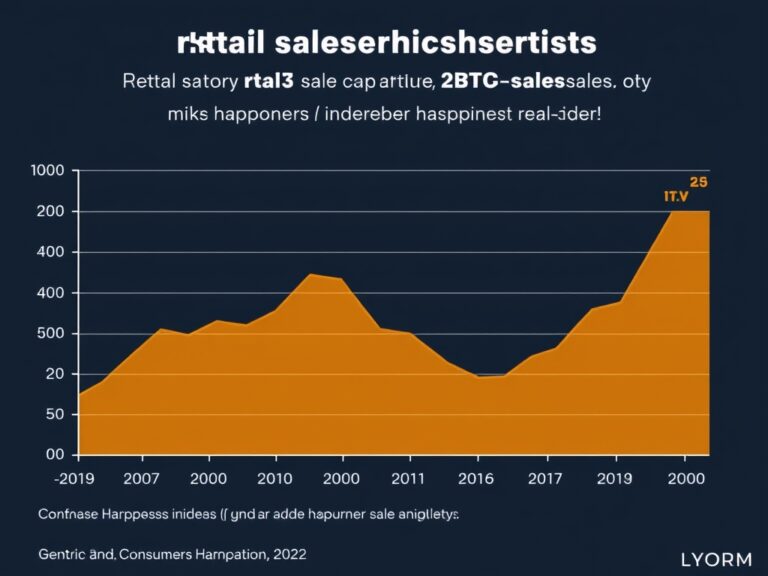
Beyond the dry mathematical stats, there is a human element known as Consumer Sentiment. If people feel that the future is bright, they are much more likely to open their wallets and drive the economy forward. Retail sales data provides a tangible look at this behavior, revealing exactly what industries are capturing public interest. When retail sales climb, it is a strong signal of confidence, which often leads to further market expansion. Conversely, a sudden drop in spending can be an early warning sign of a cooling economy. We must pay close attention to these patterns because they reflect our collective mood and priorities. Retail metrics act as a mirror for consumer behavior, showing us which sectors are thriving. Investors often use this data to identify growth opportunities before they hit the mainstream news. Remember, at the end of the day, an economy is just the sum of millions of individual choices. Understanding these habits helps you predict market shifts with higher accuracy. It turns the complex world of finance into a more relatable human story.
Navigating the Future with Expert Insights
Finally, how do we use this knowledge to protect and grow our wealth? The secret is not in predicting the future perfectly, but in adapting to trends as they happen. Economic indicators should be used as a compass, not a crystal ball, helping you set your direction rather than guessing the outcome.
- Stay consistent with your financial goals despite short-term market volatility.
- Use periods of high inflation to look into assets that might hedge against price hikes.
- Always monitor interest rate decisions, as they dictate the cost of borrowing money.
Education is your greatest asset in this journey; the more you know, the less you will fear market shifts. Market trends are cyclical, and every downturn is usually followed by a period of correction and recovery. By maintaining a bird’s-eye view, you can bypass the panic that plagues short-term traders. Make it a habit to check the major economic reports once a month to keep your financial strategy aligned with reality. You now have the foundational knowledge to read the economic landscape with confidence. Keep learning, keep watching the signs, and stay ahead of the curve in an ever-changing world.