
Making Sense of the Market: A Plain-English Guide to Economic Indicators and Trends
Decoding Economic Indicators: Why They Matter
Have you ever felt like the stock market news is written in a secret code designed only for PhDs? You aren’t alone, and making sense of the market doesn’t actually require a degree in economics. At its core, the economy is just a giant scoreboard measuring how we trade, spend, and save our resources. Economic indicators are simply the stats on that scoreboard, telling us if the game is heating up or cooling down. When we talk about market trends, we are looking for the ‘why’ behind the noise, helping you make smarter financial decisions. Whether you are an investor or just a curious citizen, understanding these metrics gives you a roadmap through financial uncertainty. In this guide, we will break down the complex jargon into simple, actionable insights. Think of this as your plain-English toolkit for navigating the global economy. Let’s peel back the layers of data and see what’s really moving the needle for your bank account today. By the end of this post, you’ll feel confident interpreting everything from unemployment rates to consumer spending habits. Ready to become an expert in your own financial future? Let’s dive into the data together.
The Big Three: GDP, Inflation, and Employment
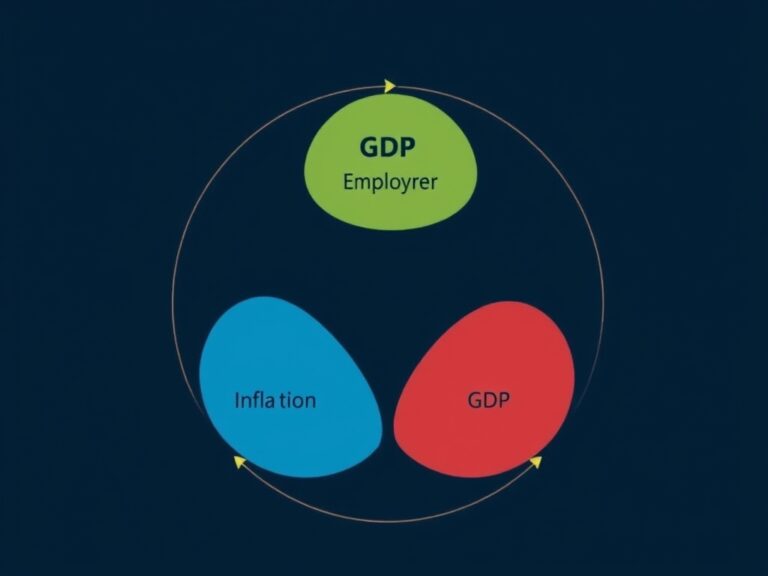
If the economy had a vital signs monitor, these three indicators would be the pulses they check first: GDP, Inflation, and the Unemployment Rate.
- GDP (Gross Domestic Product) measures the total value of all goods and services produced; think of it as the country’s collective ‘paycheck.’
- Inflation tracks how much the cost of your favorite coffee or gasoline is rising, which directly impacts your purchasing power.
- Employment Data reflects the job market health, which is the primary driver of consumer confidence and spending ability.
When GDP is rising, it usually signals a healthy, growing economy where businesses are thriving. However, if inflation rises too fast, it acts like a hidden tax that eats away at your savings. Meanwhile, the employment rate acts as the ultimate filter for the entire system; if people aren’t working, they aren’t spending. Each of these indicators is deeply interconnected, forming a delicate ecosystem of financial activity. Understanding how they pull on one another allows you to predict market shifts before they dominate the headlines. Don’t worry about memorizing every tiny movement; focus on the broader economic trends that persist over time. It’s all about seeing the forest, not just the individual trees blowing in the wind.
Consumer Sentiment: The Pulse of the People
Did you know that consumer spending accounts for nearly 70% of the U.S. economy? That is why Consumer Sentiment Indexes are considered a ‘leading indicator’—they predict where we are going by asking people how they feel right now. When people feel optimistic about their job security and personal wealth, they spend more money, which fuels business growth. Conversely, when fear or uncertainty sets in, the ‘wallet-tightening’ effect can cause a market contraction.
- Check the University of Michigan Consumer Sentiment Index to see how ordinary folks are viewing their financial future.
- Look for shifts in retail sales data to see if people are prioritizing needs over luxury wants.
- Pay attention to consumer debt levels, as these can signal whether people are living beyond their means.
By keeping a finger on the pulse of the public mood, you gain a massive advantage over those who only watch the stock tickers. Remember, markets are ultimately driven by human behavior and emotion, not just cold, hard numbers. When sentiment turns sour, the market reacts, and knowing that connection is your secret weapon. Start observing how your own spending habits align with the broader national trends discussed in the news. You are the market, and your collective decisions move the world economy forward every single day.

Navigating Market Trends with Clarity
Now that you have the basic building blocks, how do you actually apply this knowledge to your daily life or investment strategy? First, stay calm when headlines scream about market volatility; volatility is normal and often temporary. Second, look at the long-term trend rather than reacting to a single day’s data point, which is often just noise. Third, diversify your understanding by reading from a mix of sources to avoid confirmation bias.
- Stay curious: Subscribe to reputable economic summaries that explain ‘why’ and not just ‘what.’
- Think long-term: Economic cycles take years to play out, not just weeks or months.
- Be proactive: Use these indicators to adjust your financial goals based on the current economic environment.
Ultimately, making sense of the market isn’t about predicting the exact top or bottom of a cycle. It is about understanding the macro environment well enough to make decisions that keep you safe and prosperous. By mastering these basics, you shift from being a passive observer to an informed participant. The economy might seem like a complex, chaotic beast, but with a bit of practice, you’ll find it follows predictable patterns. Keep learning, stay patient, and remember that you possess the tools to navigate any market condition. You are now equipped to cut through the jargon and see the true story behind the charts.