
Making Sense of the Markets: A Plain English Guide to Economic Indicators and Trends
Decoding the Financial Pulse: Why Economic Indicators Matter
Have you ever scrolled through financial news and felt like you needed a decoder ring just to understand the headlines? You are certainly not alone, as the world of economic indicators can often feel like a secret language designed to keep regular investors on the sidelines. At its core, economic data is simply the pulse of the nation—it tells us whether the economy is healthy, struggling, or gearing up for a sprint. Understanding these trends isn’t just for Wall Street professionals; it is a vital skill for anyone looking to make smarter decisions about their personal finances, career moves, or investment portfolios. Think of these indicators as a GPS for your wealth, helping you navigate through market volatility with confidence rather than fear. By grasping a few key concepts, you can transform complex data into actionable insights that work for you. Let’s strip away the jargon and look at how these signals actually impact your daily life and long-term financial health. Whether it is inflation, employment rates, or consumer confidence, these metrics tell a story that affects your wallet in profound ways. Are you ready to stop guessing and start understanding the bigger picture of the global economy? Let’s dive into the metrics that truly matter for your financial journey.
The Big Three: GDP, Unemployment, and Inflation
If you only watch three indicators, make sure they are the big hitters: GDP (Gross Domestic Product), the unemployment rate, and inflation.
- GDP represents the total value of goods and services produced, serving as the ultimate thermometer for economic temperature.
- Unemployment rates tell us how many people are actively searching for work, which is a major driver of consumer spending.
- Inflation, measured by the Consumer Price Index (CPI), reveals how much your purchasing power is changing over time.
When GDP grows, it usually suggests businesses are expanding and hiring, which is great for the economy overall. However, if inflation rises too quickly, it eats away at your savings, making everything from gas to groceries significantly more expensive. It is a delicate balancing act managed by central banks like the Federal Reserve, which often adjusts interest rates to keep these metrics in check. Keeping a pulse on these three items will provide you with a clearer perspective than 90% of the daily market noise. These indicators are reported monthly or quarterly, providing consistent benchmarks that help us track our progress over the long haul. Remember, when you see a dip in employment, it often precedes a shift in consumer habits, which can then influence the entire retail sector. Stay curious, stay informed, and remember that these numbers are the foundation upon which your financial strategy should be built.
Uncovering Consumer Sentiment: The Human Factor
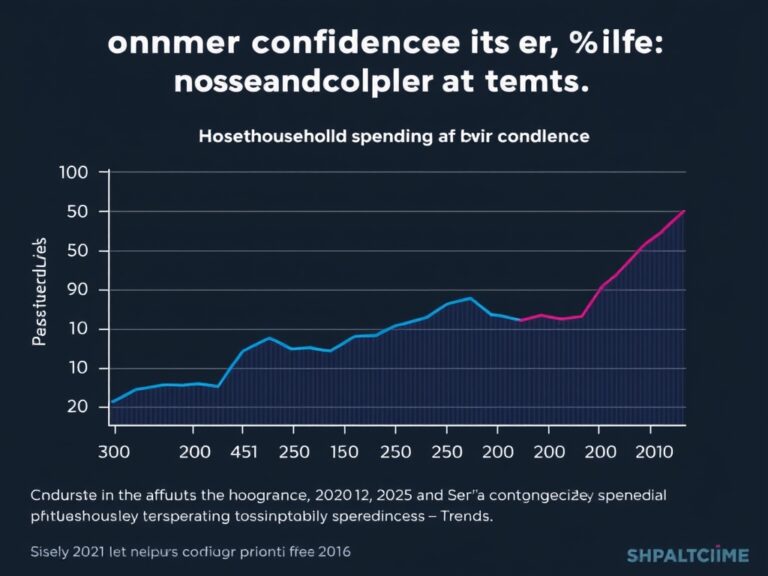
Beyond the dry numbers, there is a fascinating metric known as Consumer Confidence, which measures how optimistic or pessimistic people are about the current and future state of the economy. When people feel good, they spend money; when they feel anxious, they tighten their belts and boost their savings. This shift in sentiment is a powerful leading indicator, meaning it often predicts economic turns before they actually show up in GDP reports. Imagine millions of households deciding whether to book a vacation or pay down debt; their collective decision is what drives the engine of commerce. If confidence is high, businesses invest in growth and innovation, which creates more jobs and fuels further growth. Conversely, a sudden drop in sentiment can lead to a self-fulfilling prophecy of an economic slowdown. You can track this data through the Consumer Confidence Index, which is released regularly and offers a glimpse into the collective psychology of the market. Understanding this ‘human factor’ allows you to anticipate market volatility rather than reacting to it impulsively. It is about recognizing that economics is as much about human behavior as it is about fiscal policy or trade balances. By keeping an eye on how your peers feel, you gain a unique advantage in understanding where the broader market might head next.
Putting It All Together: Your Roadmap to Financial Literacy
Now that we have covered the basics, how do you actually apply this to your life? It starts by creating a habit of checking reliable financial news sources and identifying how these indicators affect your specific situation. Don’t get overwhelmed by the volume of information; focus on the trends rather than the day-to-day fluctuations which are often just ‘noise.’
- Use a simple spreadsheet to track how major announcements impact your investments or savings rates.
- Prioritize long-term goals over short-term market panic, as market cycles are inevitable.
- Consult with a financial advisor if you are unsure how specific economic shifts affect your retirement planning.
Remember that patience is your greatest asset in an unpredictable market environment, and volatility is simply the price of admission for long-term growth. As you become more comfortable with these indicators, you will find that you feel significantly more empowered when making major financial decisions. You are no longer just a passive observer of the economy, but an active participant who understands the forces at play. Education is the most effective hedge against uncertainty, providing you with the tools to build a resilient and thriving financial future. So, continue to learn, stay engaged with the latest trends, and trust the process of informed decision-making. You have the potential to navigate any economic season with grace, wisdom, and a strategy that puts your long-term success first.