
Understanding Market Movements and Economic Indicators: A Plain-English Guide
Decoding the Pulse of the Global Economy
Have you ever wondered why stock markets swing wildly one day and remain perfectly calm the next? Understanding market movements can feel like trying to decipher a secret code, but it is actually rooted in clear economic signals. At its core, the economy is simply a giant collection of human decisions, reactions, and expectations. When we talk about market indicators, we are essentially looking at the data points that reveal how healthy that decision-making process is. You don’t need a PhD in finance to grasp these concepts; you just need to learn how to read the patterns. Think of these indicators as the dashboard of a car, giving you vital info like speed, fuel levels, and potential engine trouble before things get serious. By mastering these basics, you can move from feeling overwhelmed to making informed, proactive decisions about your financial future. Let’s break down the noise so you can focus on the signals that actually matter for your portfolio.
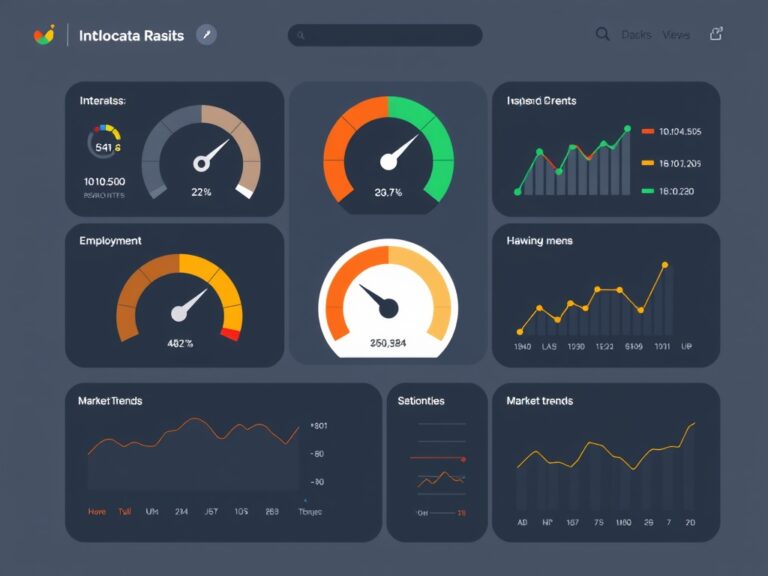
The Big Three: GDP, Inflation, and Employment
To really get a handle on the economy, we need to focus on the ‘Big Three’ indicators that every investor watches like a hawk. First, there is Gross Domestic Product (GDP), which is essentially the total scorecard for the nation’s economic health, measuring all goods and services produced. Then we have Inflation, typically tracked by the Consumer Price Index (CPI), which tells us how fast prices are rising and how much your dollar is losing its purchasing power over time. Finally, the Unemployment Rate acts as a barometer for the labor market, showing us how easily people can find work and earn an income to fuel consumption.
- GDP tells us how big the economic pie is.
- Inflation reveals how expensive that pie has become.
- Employment proves whether people have the money to buy a slice.
If these three are moving in harmony, the markets usually react with stability and growth. When one of them goes haywire, however, investors start to get nervous and pull back, which is exactly when you see those sudden market corrections occur. Keeping an eye on these monthly reports will give you a major edge in understanding the big picture.
Interest Rates and Central Bank Magic
If there is one lever that controls the entire economic machine, it is the interest rate set by central banks like the Federal Reserve. When the Fed raises rates, they are effectively tapping the brakes on the economy to keep inflation from running away, which makes borrowing money more expensive for everyone. Conversely, when they lower rates, they are pressing the gas, encouraging businesses to expand and consumers to spend, which usually gives the stock market a healthy boost. Why does this matter to you? Because interest rates influence everything from your mortgage payments to the yield on your savings account and the borrowing costs for major corporations. Key takeaways regarding rates:
- Higher rates often hurt high-growth tech stocks.
- Lower rates tend to benefit real estate and consumer goods.
- Investors are always trying to ‘predict’ the Fed’s next move.
As a smart investor, you should watch for ‘hawkish’ or ‘dovish’ language in official central bank statements, as these hints usually dictate market sentiment long before the official change happens. Understanding this relationship helps you avoid being blindsided by sudden shifts in policy.
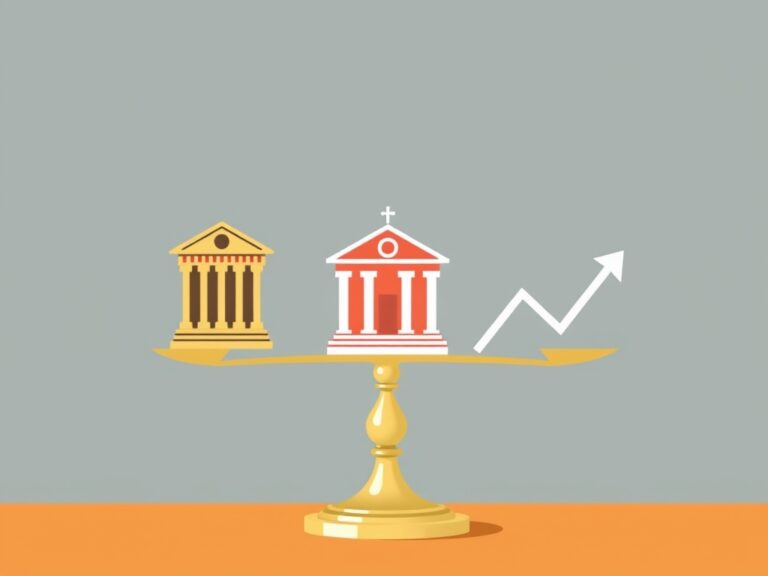
Sentiment: The Invisible Market Driver
Finally, we cannot talk about market movements without mentioning the most unpredictable factor of all: investor sentiment. Even if all the economic indicators look positive, the market can still crash if fear takes hold of the masses. This psychological component—often called the ‘fear and greed’ cycle—can cause prices to deviate significantly from their intrinsic value. How do you navigate this? You must learn to separate temporary market hysteria from long-term economic reality, which is easier said than done. You can use tools like the VIX index, or the ‘Volatility Index,’ to measure how fearful traders are feeling on any given day.
- Greed peaks when everyone is excited and buying without doing research.
- Fear hits its high point when news headlines are at their absolute worst.
- Staying objective during these peaks and troughs is the hallmark of a successful investor.
Always remember that the market is a voting machine in the short term, but it acts like a weighing machine in the long term. If you keep your emotions in check and stay focused on solid economic fundamentals, you will be well-equipped to ride out any storm that comes your way.