
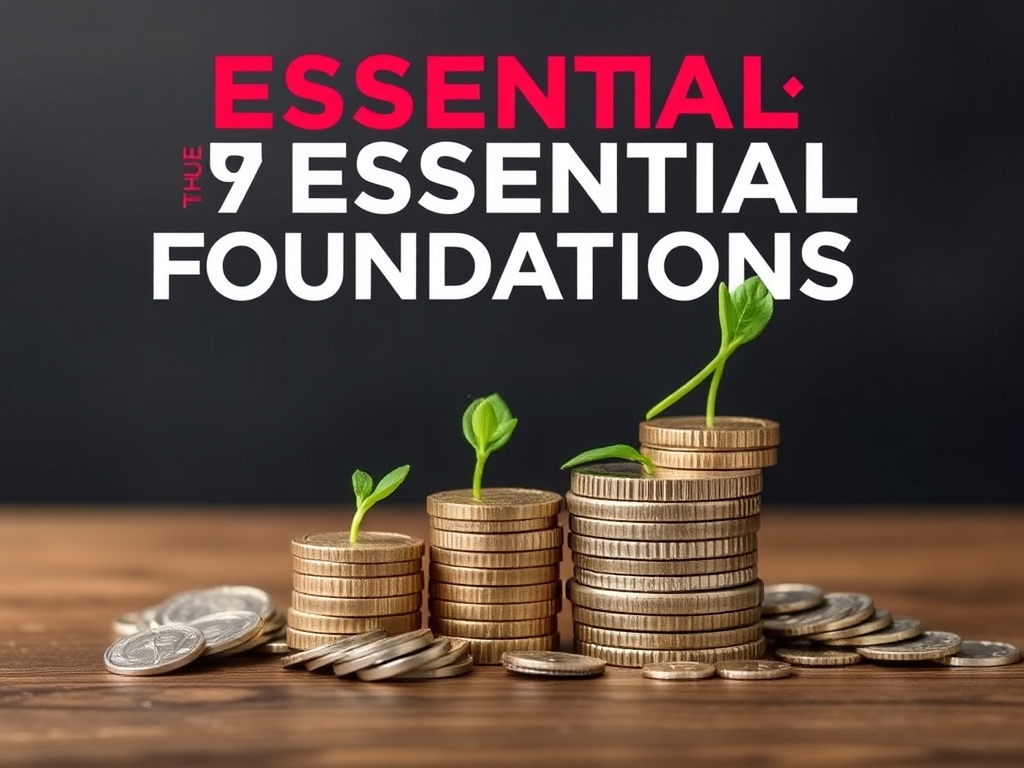
7 Essential Financial Foundations for Building Long-Term Wealth
Building Your Financial Fortress: Where Do You Start?
When it comes to long-term wealth building, most people look for a ‘get-rich-quick’ scheme, but the truth is far simpler and much more reliable. Developing a rock-solid financial foundation is the difference between surviving from paycheck to paycheck and actually achieving true financial freedom. First, you need to understand that your money is a tool, and without a plan, that tool remains in the shed. We’ll explore the seven pillars that transform your bank account into a growth engine. Think of these foundations like the roots of a giant oak tree; they need to be deep and healthy to support the massive growth above. By focusing on budgeting, emergency funds, and debt management, you are creating a buffer against life’s inevitable surprises. Are you ready to stop stressing about bills and start building a legacy? Let’s dive into these actionable strategies that move the needle forward for your future. Remember, consistency is your best friend on this journey, so don’t be discouraged if you’re starting from zero. Every expert investor was once a beginner, just like you, taking their first step toward financial mastery.

The Big Three: Budgeting, Emergency Funds, and Debt
To master your personal finance, you must first master the art of the conscious budget. A budget isn’t a restriction on your life; it is a roadmap that tells your money exactly where to go so you aren’t left wondering where it went at the end of the month.
- Track every single expense for 30 days.
- Differentiate between wants and needs.
- Automate your savings as soon as the paycheck hits.
Next, you must cultivate an emergency fund. Life is unpredictable—cars break down, jobs get lost, and medical bills arise—so having a cash cushion equivalent to 3 to 6 months of expenses is non-negotiable. This fund prevents you from reaching for high-interest credit cards when chaos strikes. Speaking of credit, managing debt is the third pillar of this triad. Not all debt is created equal, so prioritize paying off high-interest consumer debt like credit cards before you worry about anything else. By eliminating these predatory interest rates, you effectively give yourself a massive raise. Once you tackle these three, you will feel a significant weight lift off your shoulders, allowing you to focus on the exciting phase: growing your wealth. Imagine the peace of mind that comes from knowing you are prepared for whatever comes next.
The Power of Investing and Retirement Planning
Now that your foundation is stable, it is time to put your money to work through intelligent investing. Compound interest is often called the eighth wonder of the world for a reason, and the earlier you start, the more powerful it becomes. You don’t need a million dollars to start; you just need to start consistently, even if it’s small amounts.
- Open a tax-advantaged account like a 401(k) or a Roth IRA.
- Diversify your portfolio with index funds or ETFs to reduce risk.
- Understand your risk tolerance and stick to your strategy.
Most beginners get scared by market volatility, but if you have a long-term mindset, fluctuations are just noise. Instead of trying to pick the ‘next big stock,’ focus on broad market exposure that grows over time. Retirement planning isn’t just for ‘old’ people; it is a vital part of your long-term wealth strategy. Even if you’re in your twenties, your future self will thank you for the disciplined contributions you make today. You should aim to increase your savings rate by 1% every year until it hits a comfortable range. This is the secret path to financial independence that most people ignore until it’s too late. Start now, be patient, and watch as your net worth begins its climb toward the peak.

Increasing Income and Maintaining the Wealth Mindset
The final pieces of the puzzle involve increasing your earning power and maintaining a growth-oriented mindset. While cutting costs is important, your ability to increase your income through side hustles, career advancement, or continuous education is essentially unlimited.
- Invest in yourself: take courses and learn high-income skills.
- Look for passive income streams like dividend stocks or rental properties.
- Network with people who are already where you want to be.
Building wealth isn’t just about math; it’s about psychology and habits. You must guard your time and focus as carefully as you guard your money. Stay away from lifestyle inflation—when you get a raise, don’t immediately increase your spending to match it. Keep your lifestyle modest, invest the difference, and you will achieve financial independence years, if not decades, ahead of your peers. Being wealthy is about the choices you can make when your money is working for you, not the fancy car in your driveway. Embrace the journey of lifelong learning because the world is constantly changing, and your financial strategy must evolve with it. You have the tools, the plan, and the foundation; now all you need is the discipline to execute consistently every single day. Let this be the start of your journey toward true prosperity and total control over your financial destiny.