
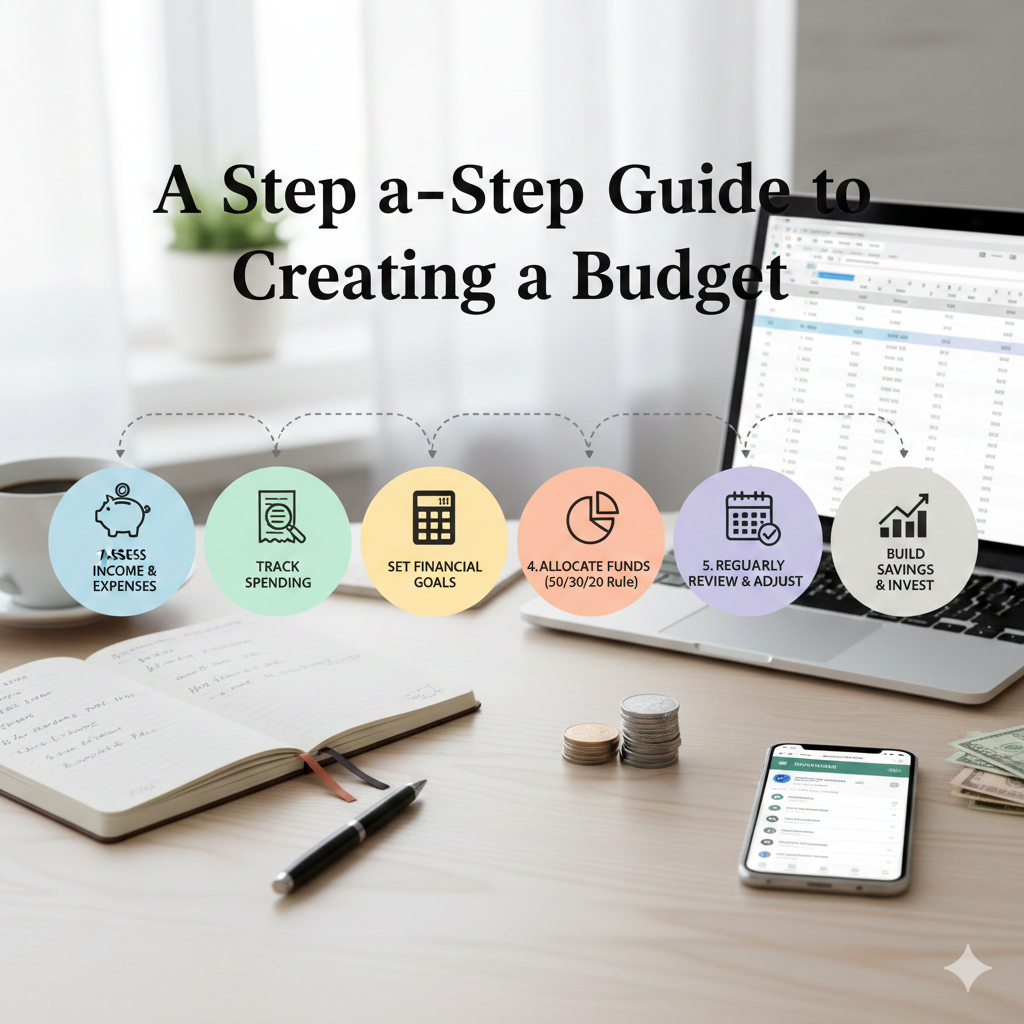
A Step-by-Step Guide to Creating a Budget
Creating a budget is a fundamental step toward achieving financial stability and reaching your financial goals. Here’s a step-by-step guide to help you establish a budget that works for you:
1. Determine Your Monthly Income
Start by calculating your net monthly income—the amount you take home after taxes and deductions. Include all sources of income, such as your salary, freelance work, or any side gigs. If your income varies, consider using an average from the past few months to get a realistic estimate. (source)
2. List All Expenses
Categorize your expenses into two main groups:
- Fixed Expenses: These are consistent monthly costs, such as rent or mortgage payments, utilities, insurance premiums, and loan repayments.
- Variable Expenses: These fluctuate each month and include groceries, entertainment, dining out, and transportation costs.
Be thorough and include all expenses, even those that occur annually or quarterly. For instance, divide annual expenses like insurance premiums by 12 to account for them monthly. (source)
3. Set Clear Financial Goals
Define your short-term and long-term financial objectives. Short-term goals might include building an emergency fund or paying off credit card debt, while long-term goals could involve saving for a home or retirement. Having clear goals will guide your budgeting decisions and keep you motivated. (source)
4. Choose a Budgeting Method
Select a budgeting approach that aligns with your financial habits and preferences. Here are a few popular methods:
- 50/30/20 Rule: Allocate 50% of your income to needs, 30% to wants, and 20% to savings and debt repayment. (source)
- Zero-Based Budgeting: Assign every dollar of your income to specific expenses or savings, ensuring your income minus expenses equals zero. (source)
- Envelope System: Use cash for specific spending categories, placing the allocated amount in separate envelopes. Once the cash is spent, avoid additional purchases in that category until the next budgeting period. (source)
5. Implement and Monitor Your Budget
Choose a budgeting tool that suits you, such as a spreadsheet, budgeting app, or a physical planner. Regularly track your spending to ensure you adhere to your budget. Many budgeting apps offer features like expense tracking, goal setting, and financial insights to help you stay on course. (source)
6. Review and Adjust Regularly
Your financial situation and goals may change over time. Regularly reviewing and adjusting your budget ensures it remains aligned with your current circumstances and objectives. Aim to revisit your budget monthly or quarterly to make necessary adjustments. (source)
Additional Tips:
- Automate Savings: Set up automatic transfers to your savings or investment accounts to ensure consistent contributions. (source)
- Cut Unnecessary Expenses: Identify areas where you can reduce spending, such as dining out less frequently or canceling unused subscriptions. (source)
- Stay Flexible: Life is unpredictable. Be prepared to adjust your budget as needed to accommodate unexpected expenses or changes in income.
By following these steps and maintaining discipline, you’ll be well on your way to creating a budget that supports your financial goals and promotes long-term financial health.
For a visual guide on budgeting, you might find this video helpful: