
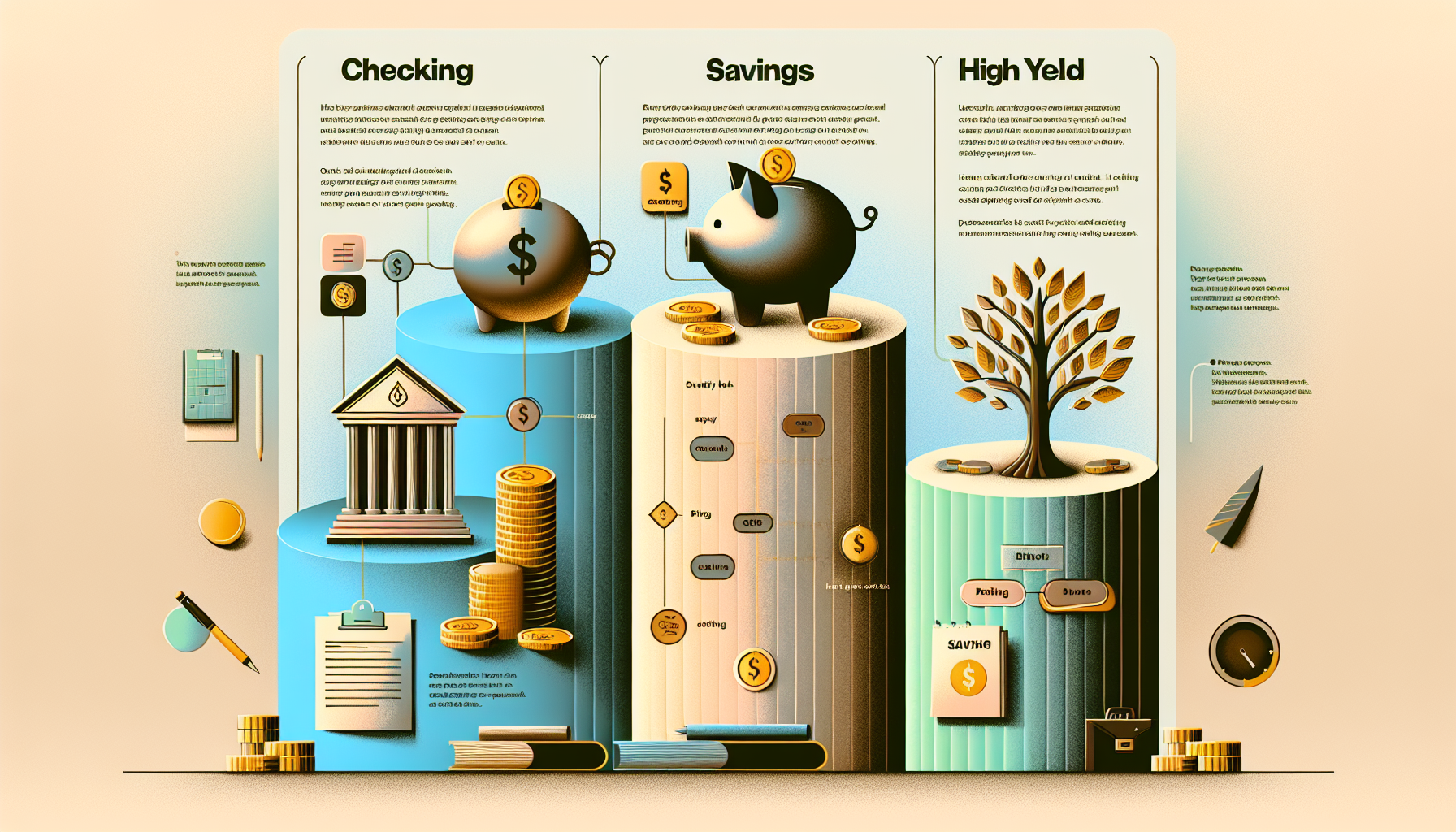
Understanding the Differences Between Checking, Savings, and High-Yield Accounts
Understanding the differences between checking, savings, and high-yield accounts is essential for effective financial management. Here’s a breakdown to help you make informed decisions:
Checking Accounts
- Purpose: Designed for daily transactions such as paying bills, making purchases, and withdrawing cash.
- Features:
- Typically offer unlimited transactions.
- Often come with debit cards and check-writing capabilities.
- Generally do not earn interest or offer minimal interest.
- Considerations:
- Some accounts may have monthly maintenance fees or require a minimum balance to avoid fees.
- Interest rates, if offered, are usually low compared to savings accounts.
Savings Accounts
- Purpose: Intended for storing money over time, earning interest, and saving for future goals.
- Features:
- Earn interest on the deposited amount.
- May have limitations on the number of withdrawals or transfers per month.
- Often do not come with debit cards or check-writing capabilities.
- Considerations:
- Interest rates are typically higher than checking accounts but lower than high-yield accounts.
- Suitable for emergency funds or saving for specific goals.
High-Yield Savings Accounts
- Purpose: Offer higher interest rates than traditional savings accounts, helping your money grow faster.
- Features:
- Interest rates can be significantly higher, sometimes over 4% APY, compared to the national average of around 0.6% APY (source).
- Generally have no or low minimum balance requirements.
- May have limitations on the number of withdrawals or transfers per month.
- Considerations:
- Often offered by online banks or credit unions with lower overhead costs.
- Suitable for emergency funds and short-term savings goals.
- Interest earned is considered taxable income (source).
Key Differences
- Access to Funds:
- Checking accounts provide unlimited access for daily transactions.
- Savings and high-yield savings accounts may limit the number of withdrawals or transfers per month.
- Interest Rates:
- High-yield savings accounts offer the highest interest rates, followed by traditional savings accounts, and then checking accounts.
- Fees and Requirements:
- Checking accounts may have monthly fees or minimum balance requirements.
- High-yield savings accounts often have no or low minimum balance requirements and may have fewer fees.
Choosing the Right Account
- For Daily Transactions: A checking account is ideal for everyday spending and bill payments.
- For Saving Over Time: A traditional savings account is suitable for building an emergency fund or saving for specific goals.
- For Maximizing Interest Earnings: A high-yield savings account is beneficial for earning higher interest on your savings.
By understanding these account types and their features, you can select the ones that best align with your financial needs and goals.