
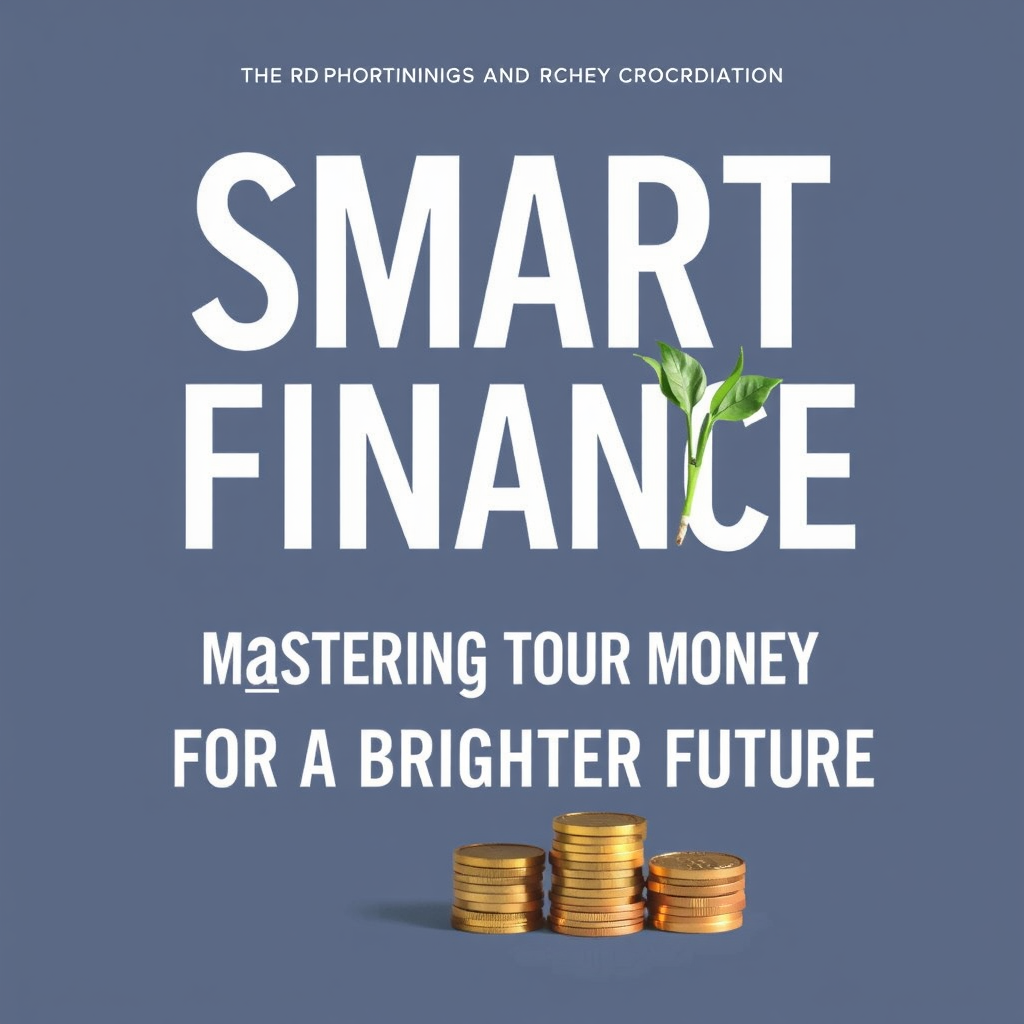
Beyond the Paycheck: The 2024 Guide to Smart Finance and Wealth Resilience
Are you working for your money, or is your money working for you? In an era defined by rapid inflation, volatile markets, and the transition toward a digital-first economy, the traditional “save 10% and hope for the best” advice is no longer sufficient. Smart Finance isn’t just about frugality; it’s about the strategic orchestration of your resources to build a life of freedom, security, and impact.
Current market trends suggest that financial literacy is the single greatest predictor of long-term wealth. With the rise of fintech, decentralized finance, and automated investing, the barriers to entry have never been lower. However, the complexity of these choices can lead to “analysis paralysis.” This guide dismantles the complexity, providing a roadmap to master your money and secure a brighter future.
1. The Psychology of Wealth: Shifting from Scarcity to Abundance
Before touching a spreadsheet or opening a brokerage account, you must address your money mindset. Financial success is 20% head knowledge and 80% behavior. Many people suffer from a “scarcity mindset,” where they focus solely on cutting costs, often at the expense of their time and mental health.
Smart finance advocates for an abundance mindset, which focuses on increasing income and optimizing value. Instead of asking “Can I afford this?”, start asking “How can I earn enough to afford this while still meeting my investment goals?” This shift encourages professional growth, side hustles, and strategic risk-taking.
- Identify Money Triggers: Understand why you spend. Is it stress, social pressure, or boredom?
- The Value-Based Spending Model: Ruthlessly cut spending on things that don’t bring you joy, but spend extravagantly on things that do—provided they fit within your overall plan.
- Delayed Gratification: The ability to choose a better future over a momentary impulse is the hallmark of the wealthy.
2. The New Rules of Budgeting: The 50/30/20 Framework 2.0
The word “budget” often feels like a diet—restrictive and temporary. In smart finance, we prefer the term Cash Flow Management. The goal isn’t to track every penny but to ensure your money is moving in the right direction automatically.
The 50/30/20 Rule remains a gold standard, but it requires modern adaptation:
- 50% for Needs: Housing, utilities, groceries, and insurance. In high-cost-of-living areas, this may require lifestyle adjustments or “house hacking” to keep costs under control.
- 30% for Wants: This is your lifestyle fund. Travel, dining out, and hobbies. By allocating a fixed percentage, you remove the guilt associated with spending.
- 20% for Financial Goals: This is the most critical slice. It includes debt repayment beyond minimums, emergency funds, and—most importantly—investing.
Pro-Tip: Use automation to move these funds the moment your paycheck hits. If you never see the money in your checking account, you won’t miss it.
3. Strategic Debt Management: Distinguishing Leverage from Liability
Not all debt is created equal. Smart finance involves understanding the difference between productive debt and destructive debt. High-interest credit card debt is a financial emergency; a low-interest mortgage or a student loan for a high-ROI degree can be a tool for wealth creation.
The Debt Snowball vs. The Debt Avalanche
If you are carrying multiple balances, choose your strategy based on your personality:
- The Debt Snowball: Pay off the smallest balance first. This creates psychological “wins” that keep you motivated.
- The Debt Avalanche: Pay off the debt with the highest interest rate first. Mathematically, this saves the most money over time.
In a high-interest environment, refinancing and debt consolidation are essential tools. If your credit score has improved, you may be able to move high-interest debt to a lower-interest personal loan, saving thousands in the process.
4. Investing in the Volatile Era: Beyond the Savings Account
With inflation often outpacing traditional savings account interest rates, keeping all your cash in a bank is a recipe for losing purchasing power. To build real wealth, you must participate in the global economy through investing.
The Power of Compound Interest
Albert Einstein famously called compound interest the “eighth wonder of the world.” If you invest $500 a month with an 8% annual return, after 30 years, you’ll have over $700,000. The key ingredient isn’t the amount of money; it’s time. Starting five years earlier can result in hundreds of thousands of dollars more at retirement.
Modern Asset Allocation
A smart portfolio is a diversified portfolio. Consider a mix of the following:
- Low-Cost Index Funds: These track an entire market index (like the S&P 500), offering instant diversification and low fees.
- Exchange-Traded Funds (ETFs): Similar to index funds but traded like stocks, allowing for more niche exposure to sectors like technology or green energy.
- Real Estate: Whether through direct ownership or Real Estate Investment Trusts (REITs), property provides a hedge against inflation and a source of passive income.
- Alternative Assets: A small percentage (1-5%) of a portfolio can be allocated to high-risk, high-reward assets like cryptocurrency or venture capital, but only after the core foundation is built.
5. Building Resilience: The Emergency Fund and Insurance
Smart finance isn’t just about the offensive (earning and investing); it’s also about the defensive. Life is unpredictable. A job loss, medical emergency, or major car repair can derail years of progress if you aren’t prepared.
The Emergency Fund: Aim for 3 to 6 months of essential expenses kept in a High-Yield Savings Account (HYSA). This money should be liquid and separate from your daily spending account. In an unstable economy, some experts now recommend a 9-month buffer for those in specialized or volatile industries.
Insurance as a Wealth Protector: You work too hard to lose everything to a lawsuit or a health crisis. Ensure you have adequate coverage in:
- Term Life Insurance (especially if you have dependents).
- Disability Insurance (to protect your greatest asset: your ability to earn an income).
- Umbrella Insurance (if you have significant assets to protect).
6. Tax Optimization: It’s Not What You Earn, It’s What You Keep
Taxes are likely your largest lifetime expense. Smart finance involves utilizing legal tax-advantaged accounts to shield your growth from the IRS. This is where the difference between “rich” and “wealthy” is often determined.
Retirement Vehicles
401(k) or 403(b): If your employer offers a match, contribute at least enough to get the full amount. This is essentially a 100% return on your investment immediately.
Roth IRA vs. Traditional IRA: A Roth IRA allows you to contribute post-tax dollars, but your withdrawals in retirement are 100% tax-free. A Traditional IRA offers a tax break today but is taxed as income later. For young professionals, the Roth IRA is often the superior choice due to the long horizon for tax-free growth.
The HSA: The Secret Weapon
A Health Savings Account (HSA) is the only “triple-tax-advantaged” account in existence. Contributions are tax-deductible, growth is tax-free, and withdrawals for medical expenses are tax-free. If you can afford to pay for medical bills out of pocket and let the HSA grow, it becomes a formidable secondary retirement account.
Conclusion: The Path to Financial Autonomy
Mastering your money is not a destination; it is a continuous process of refinement. The goal of Smart Finance is to reach a point of Financial Autonomy—the state where your work is a choice, not a necessity.
Your next steps are simple but profound:
- Audit your subscriptions and recurring expenses today.
- Automate a transfer of at least 10% of your income to an investment account.
- Educate yourself by reading one financial book per quarter.
The future you desire is built on the decisions you make today. By embracing these principles of smart finance, you aren’t just saving money; you are buying back your time and creating a legacy of security for yourself and your family. Start now, be consistent, and watch as the compound effect transforms your life.